

Years ago, I had a conversation with the lead EMT at Thunderhill Raceway Park. I’ve been driving and riding at the Northern California racetrack since it opened. The staff has always embraced safety and is proactive with risk mitigation, car or bike.
During that conversation, I asked a pretty simple question: How many motorcycle crashes does Thunderhill have in a year? The answer? About 900. Nine hundred crashes. At one racetrack. In one year. I knew the number would be high, but I didn’t think it would be that high.
That conversation became the basis for a podcast published in 2017. Nearly a decade later, the subject is even more relevant. After all, nobody pulls through the gates of a racetrack planning to crash. I certainly don’t.
I’m not afraid of crashing, but I don’t want to crash. In fact, I’ve spent my entire career developing habits, processes, and techniques designed to make me faster while mitigating risk. But I also understand it can happen every time I roll onto the racing surface.
Cars. Motorcycles. Track days. Racing. Crashing has consequences. Acknowledging those consequences isn’t being negative. It isn’t driving or riding scared, either. And it doesn’t mean you’re expecting to crash. It just means you’re taking the sport seriously.
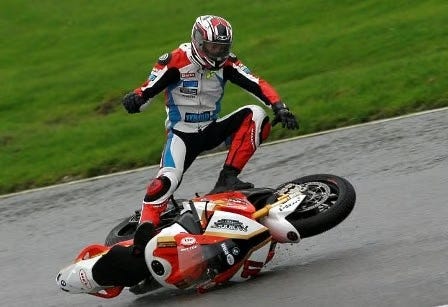
Are you taking the sport seriously?
This is one of the strange contradictions in motorsports. We spend thousands—sometimes tens of thousands—of dollars on motorcycles, cars, tires, suspension, entry fees, transportation, hotels, lap timers, and go-fast parts.
Then, we participate in a sport where a mistake can put us in an ambulance, and somehow planning for that possibility feels overly cautious. Let me tell you, and I’m speaking from experience here, it isn’t.
Years ago, I had a conversation with a few special forces operators who wanted to ride motorcycles. They asked me about training and were shocked by how little most people undertake for something with potentially enormous consequences.
To them, riding a motorcycle was riskier than their day job. That stuck with me. Most of us aren’t competing in a world championship. We’re normal people. We have jobs. Families. Mortgages. Businesses. People who depend on us.
We go to track days, club races, and schools because we love doing this. So if we’re going to participate in a sport with consequences, part of being serious about it is asking a question we would rather not ask: What happens if today goes wrong?
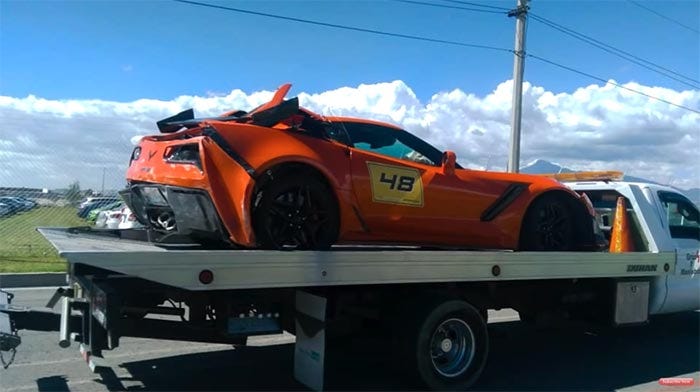
The conversation starts well before you get to the track. One of the biggest issues that came out of my original conversation with the Thunderhill crew had nothing to do with riding technique. It was logistics.
Do you come to the track alone? If you do, who is your pit buddy? Who knows where your truck keys are? What about your wallet and phone? Who has your emergency contact information? Who knows how to deal with your motorcycle or trailer?
Those questions seem ridiculously mundane when you’re setting tire pressures and getting suited up for the first session. They become incredibly important when you’re flat on your back in an ambulance.
You don’t need to travel with someone. But if you arrive alone, find somebody you trust and make them your pit buddy. “My keys are here. My wallet is here. My insurance information is here. My emergency contact is here.”
Done. And it only took 5 minutes. In that time, you’ve just eliminated a huge amount of unnecessary chaos if something happens. Consider the consequences. Don’t put yourself in a position to fail.
Know what your insurance actually covers
This was another point from the original podcast that caught me by surprise: Some riders don’t have insurance. Sometimes, even having insurance isn’t enough. Do you know exactly what your policy covers?
I’m not an insurance expert, so I’m not going to tell you what policy to buy. But I will tell you to ask questions. Am I covered while on the track? What about ambulance transportation? A helicopter? What if I am out of commission for an extended period?
Work the problem backward. What’s the worst-case scenario? Who could it affect? And what can you reasonably do to reduce those consequences? Again, this isn’t planning to crash. It’s planning for the consequences of participating in the sport. There’s a huge difference.
Don’t let logistics determine your medical care
Of everything I learned from that original conversation, this one may have surprised me the most. A rider crashes. Medical personnel recommend an ambulance. The response? “No, I’m good. I’ll drive myself.” Or, “I only live three hours away. I’ll just head home.”
Why? Because the truck is here. The trailer is here. Your vehicle needs to get loaded. The dog needs to be fed. You’ve got to get home. All perfectly legitimate problems. None of them, however, should determine the medical care you receive.
If something happens, take 10 seconds and ask: What’s the best course of action for this injury? Make that decision first. Then, figure out the logistics. Your truck can be retrieved and your vehicle loaded. Someone can bring your trailer home. Those are solvable problems.
What initially appeared to be a manageable injury can quickly and easily become a much bigger problem, potentially a life-changing experience, simply because getting appropriate care is seen as inconvenient.
Your gear isn’t a fashion statement
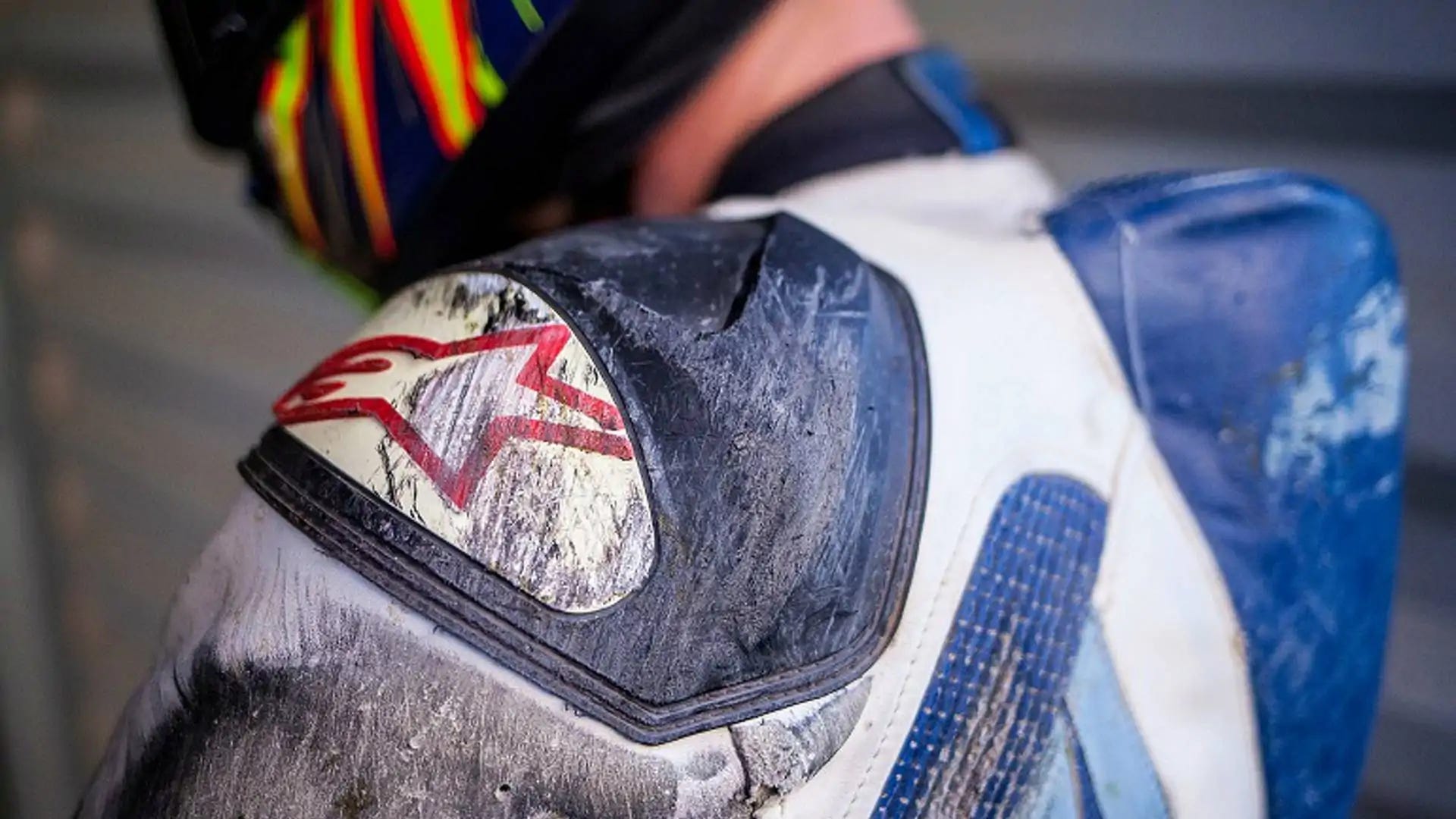
Helmet. Gloves. Boots. Suit. Airbag. I’m not going to turn this into a gear-buying guide, but there’s one incredibly simple standard: Your gear needs to fit, it needs to work, and it needs to be in good condition.
For years, I wore the wrong-size helmet. I didn’t know it until I was professionally fitted. I’ve seen gloves with holes. Boots with worn-out soles. Suits so tight the rider couldn’t move properly. Suits so loose the protection rotated from where it was needed most.
We all have our favorite gear. I do, too. But eventually it needs to be replaced. And airbags? I’m a huge fan. They’re expensive, but so is getting hurt. That said, you don’t have to run out today and replace everything you own.
When the time comes to replace your gear, make protection part of the decision, not just comfort, fancy looks, or discounted pricing. Give yourself every reasonable opportunity to walk away from even the worst crash.
Is your vehicle ready?
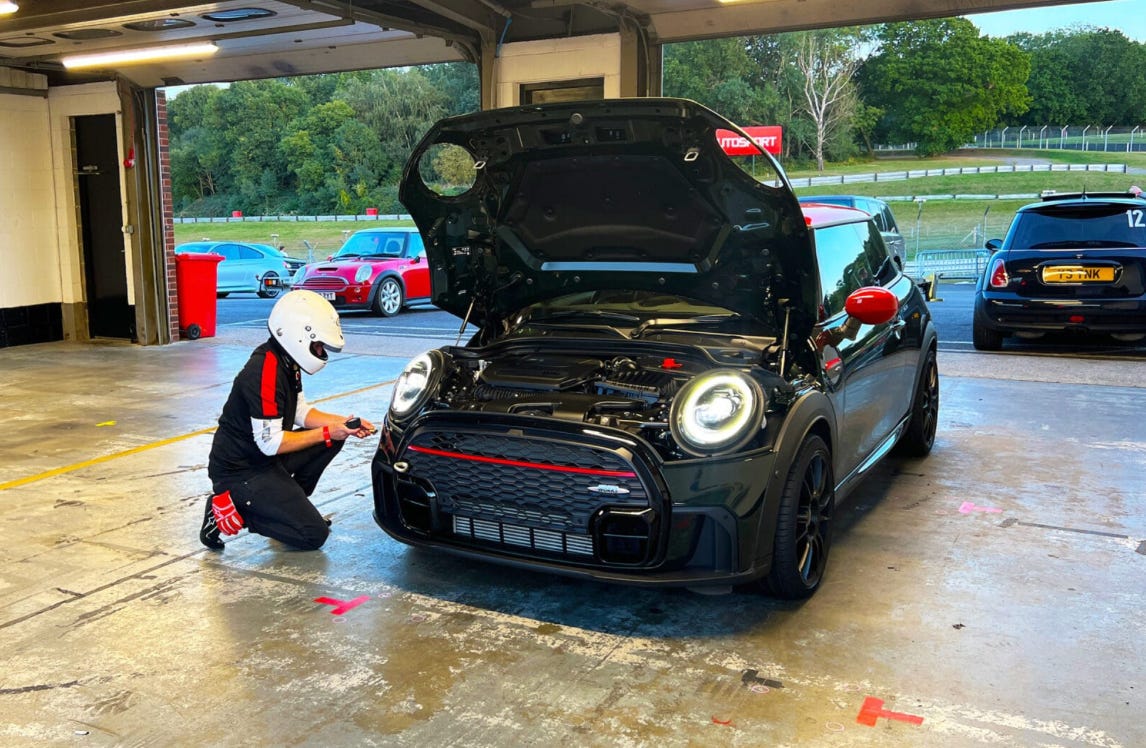
The same thinking applies to your motorcycle or car. Maintenance isn’t glamorous. Neither is preparation. But there are things that simply shouldn’t be negotiable when taking your vehicle onto a racetrack.
Is the vehicle mechanically sound? Are critical fasteners secure? Are the tires appropriate and in good condition? Is the engine leak-free? Are the brakes in satisfactory condition? Has someone competent looked over the entire machine?
I’ve crashed at more than 100 mph because another motorcycle dumped oil on a racetrack. That experience quickly changes your perspective. Preparation isn’t just about protecting you. It affects everyone sharing the track with you.
Are you willing to throw it down the road?
We love our vehicles. Beautiful paint. Carbon fiber. Trick suspension. Expensive wheels. Thousands of dollars in modifications. Then, we take them to the racetrack. Before making that step, you need to reconcile those two things.
I’m not saying you shouldn’t care about your equipment. Of course, you should. I’m saying you need to understand the environment. The same goes for letting someone else drive your car or ride your motorcycle.
If your buddy crashes, what happens? Who pays? If you’re handing the keys to a friend, assume the worst-case scenario before they leave pit lane, not after they’re standing next to you holding half a motorcycle. Have the conversation first.
Speed and safety aren’t opposing goals.
For a lot of people, safety means slowing down. I don’t see it that way. The same preparation that helps you become faster also helps you mitigate risk: Training. Technique. Fitness. Equipment. Vehicle preparation.
Decision-making. Knowing your limitations. Understanding the consequences. Developing a specific process. None of those things guarantees you won’t crash. There are absolutely no guarantees in motorsports.
If the goal is to remove all risk, don’t go to the racetrack. The goal is to understand the risk and make intelligent decisions about the elements you can control. That’s what professionals do. And you don’t need to be a professional racer to approach the sport professionally.
So, do you plan to crash today?
I don’t want to crash today, tomorrow, or during any of the thousands of laps I hope are still ahead of me, but I’ve planned for the possibility. There’s a difference. Know your equipment. Know your physical condition. Know your insurance.
Have your emergency information available. Have a pit buddy. Take your protective gear seriously. Prepare your vehicle. And if something does happen, make decisions based on what’s best for your health, not what’s most convenient for getting your truck home.
None of this makes for a glamorous Instagram post. It won’t drop two seconds from your lap time. It won’t move you from the B group to the A group. But it might make sure you’re able to return to ride another day.
Plan to go fast at the racetrack. Plan to improve. Plan to have fun. But don’t make the mistake of thinking that, just because you didn’t plan on crashing, you won’t and you don’t need to formulate a plan if the worst-case scenario actually does happen.
About Ken Hill
Ken Hill is considered the top motorcycle riding coach in the U.S. He bought his first motorcycle at age 30 and began road racing the very same year. Despite the late start, Ken went on to set track records and win class championships before making his professional debut in the AMA Superbike class, where he finished in the top 10 at age 41. Ken’s passion for learning and, ultimately, bettering the sport, led him to retire from racing in 2007 and devote himself full-time to coaching. Learn more at khcoaching.com.
This is an excellent, important article. Thank you for clearly, and eloquently laying out such an important process. I am a physician, and even I didn’t think these things through completely.