

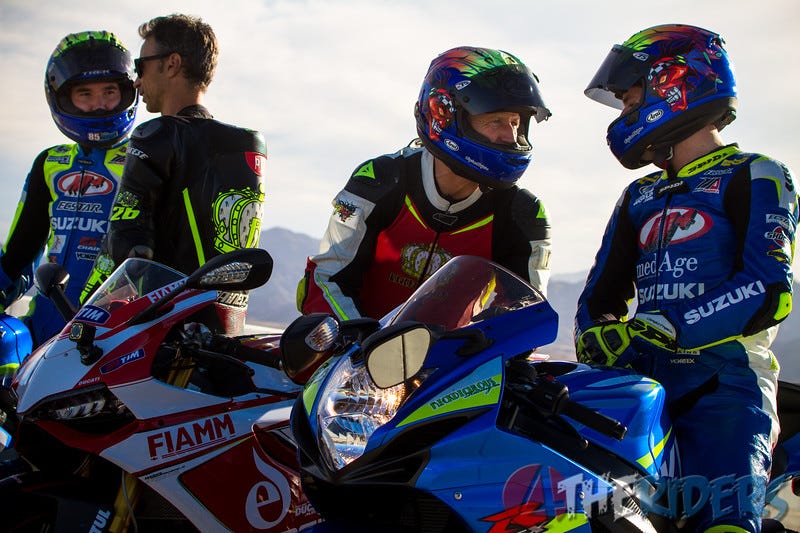
I’ve crashed enough motorcycles during my lifetime to know that tipping over at speed sits near the very top of my personal list of things I never want to do again. Not because I’m afraid of falling off, but because doing so represents failure in multiple forms:
Potential injury
Destroyed equipment
Lost track time
Wasted money
Embarrassment
Simply put, crashing sucks. Beyond that, chronic crashing isn’t sustainable for anyone who wants longevity in motorsports on either two or four wheels. Yet many drivers and riders have practically accepted that crashing is part of the racing or track-day culture.
I frequently hear the following comments at tracks I visit around the country. “There are two types of motorcyclists [or drivers]: Those who have crashed and those who are going to crash.” And, “Crashing is just part of finding the limit.”
Accidents happen. People make mistakes. Machinery fails. Sometimes, circumstances are outside our control. I’m not talking about those crashes. I’m talking about a rider slipping off on an “out” lap. Or a driver pushing for a personal best on overheated, heat-cycled rubber.
Most crashes in amateur racing or at track days have little in common with those seen at the highest levels of the sport. Formula 1 drivers and MotoGP riders extract hundredths of a second while operating at the absolute edge. How many crash on an out lap? Very few.
I originally published a version of this post six years ago as a podcast and more recently in written form. I’ve repurposed it here after overhearing a conversation last week between two riders. The crux of it was, “Sometimes, you just have to crash to find the limit.”
No, no you don’t. I found myself reflecting on an incredible statistic from the RiCKdiculous Racing School. In 2019, the instructors, of which I was one, students, and guest riders completed 16,900 combined laps. And there wasn’t a single crash. Not one. Zero.
At the same time, nearly everyone involved set PBs throughout the season. And to be clear, we didn’t put every bike in “rain mode.” From new riders to national-level winning professionals, all of us got after it. No speed limits, just carefully planned control limits.
So, how did all of those riders complete tens of thousands of laps without a single one of them ending up on the ground? The answer wasn’t luck. And it certainly wasn’t because people rode cautiously. The answer was deliberate focus.
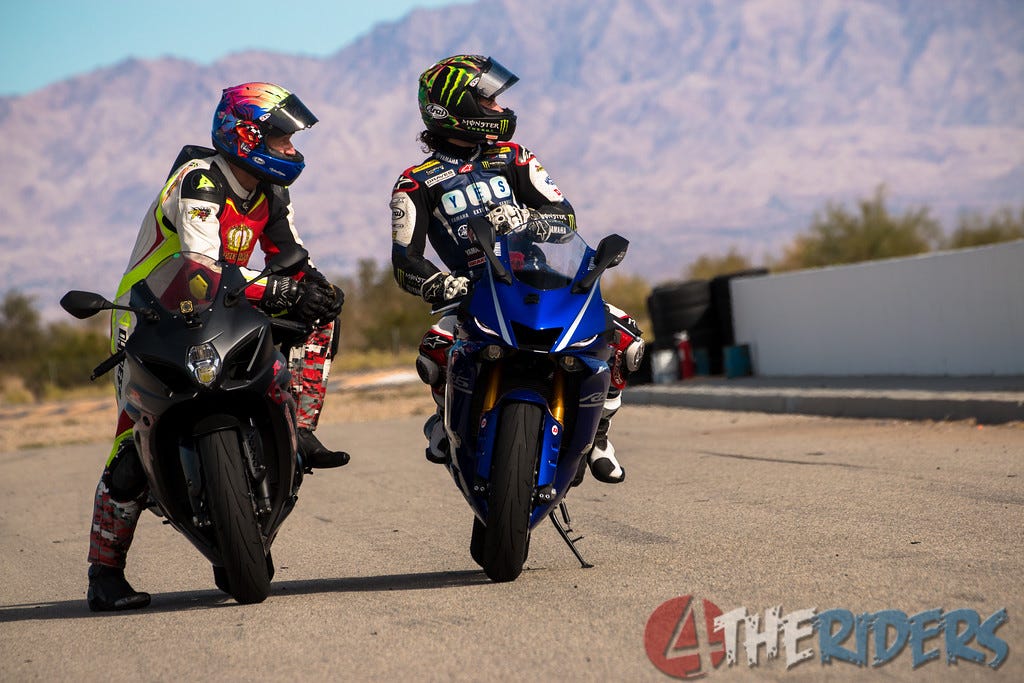
Every session had a purpose. Every lap had objectives. Every segment had a plan. Every outing had a debrief. There weren’t any random laps. No “let’s see what happens.” No “I hope today is a good day.”
This is where drivers and riders become trapped. We often believe speed and safety sit at opposite ends of a spectrum. If safety goes up, speed goes down. If speed goes up, risk increases. But that hasn’t been my experience.
In fact, the exact same process that reduces crashes is often the process that creates speed. Read that again. Clear objectives. Defined focus. Understanding what should happen and when. Knowing where your attention belongs.
This is because we rarely crash from too much process. We crash because we stray from that process. Lap times replace technique. Emotion replaces objective evaluation. And that’s where the problems begin.
This is the ultimate dilemma of our sport. Nobody wants to crash, yet everyone wants to go faster. The good news? Those two goals are not mutually exclusive. The drivers and riders making the biggest gains usually aren’t pushing the hardest.
Rather, they’re the one operating with the clearest process. They have a deliberate focus. They employ purposeful fundamentals. They have a plan. It isn’t luck. It isn’t talent. And it certainly isn’t found through random laps and hope.
Speed comes from process. It’s the same process that creates consistency, confidence, and understanding. Because the goal is never simply to just go faster. The goal is to understand more, control more, to work the process. Speed is the byproduct.
About Ken Hill
Ken Hill is considered the top motorcycle riding coach in the U.S. He bought his first motorcycle at age 30 and began road racing the very same year. Despite the late start, Ken went on to set track records and win class championships before making his professional debut in the AMA Superbike class, where he finished in the top 10 at age 41. Ken’s passion for learning and, ultimately, bettering the sport, led him to retire from racing in 2007 and devote himself full-time to coaching. Learn more at khcoaching.com.